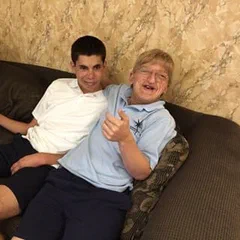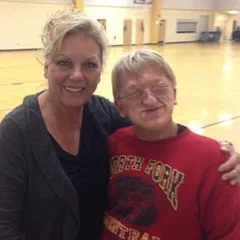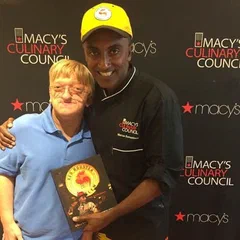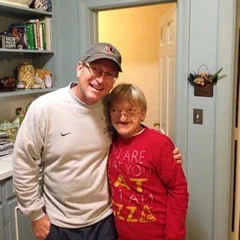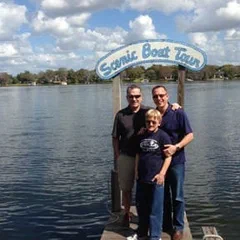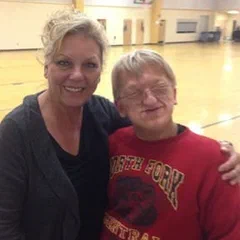
Alex Schon was born in Orlando, Florida, in May 2000 to Richard and Terri Schon. He arrived six weeks premature and was diagnosed with Cloverleaf Syndrome, a type of craniosynostosis in which multiple skull bones fuse too early. It gave him a cloverleaf-shaped, larger-than-normal head, facial differences, trouble breathing and feeding, and hydrocephalus, fluid on the brain.
At the time, only 139 cases of Cloverleaf Syndrome had ever been reported worldwide. Most doctors had never seen one. The first prognosis was that Alex would not survive.
The first year
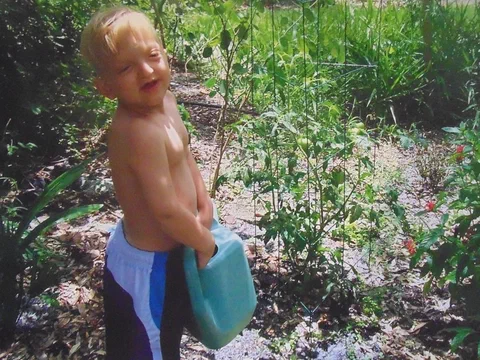
Alex’s parents heard the phrases “failure to thrive” and “surgery” constantly. He struggled to gain weight and stay hydrated. Before his first birthday he had three major operations: a VP shunt to drain fluid from his brain, a full craniotomy, and a Chiari decompression to help him eat. Against the odds, he turned one. Soon after, the seizures started. It took months of appointments to bring them under control.
Finding his way into the world
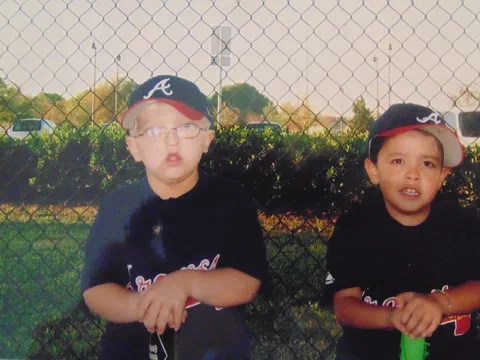
By two, Alex was going to Gymboree, preschool and mom-and-tot events, curious about everything. He needed physical, occupational and speech therapy to keep up. At three he started full-time preschool at The Princeton House Charter School, where he thrived: table food, fully potty-trained, early reading and math.
That December he began having life-threatening apnea episodes. Dr. Glenn Morrison at Miami Children’s Hospital performed another Chiari decompression. It worked, and for the first time Alex could speak. When the apnea continued, his parents chose a far more complex surgery, a monobloc advancement, to pull his skull and facial bones forward and give his brain room to grow. The eight-hour operation was a success. After his seizure medication was adjusted, the apnea stopped.
School
At six Alex moved to his zoned public elementary school, where staff were uncomfortable with his medical history. After a year his parents moved him to Windy Ridge Elementary, which had a dedicated exceptional student education department. He flourished. He learned to sleep with a CPAP machine, which transformed his dangerously low sleep efficiency, and came through eye surgery and heel-cord lengthening without trouble.
For middle and high school Alex attended Morning Star School, a private Catholic school known for inclusion. It became his safe haven. He graduated in June 2022.

The hardest surgery
The summer before his final year, Alex’s sleep apnea had worsened enough that his team at Miami Children’s Hospital recommended moving his mid-face forward with a Rigid External Distractor. Because of the expected swelling, the operation included a temporary tracheostomy. There were complications. There was also Alex’s resilience. Eighteen months later the trach came out and he was sleeping well.
Today
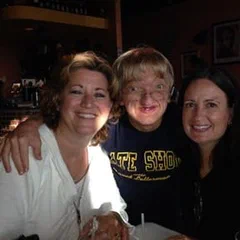
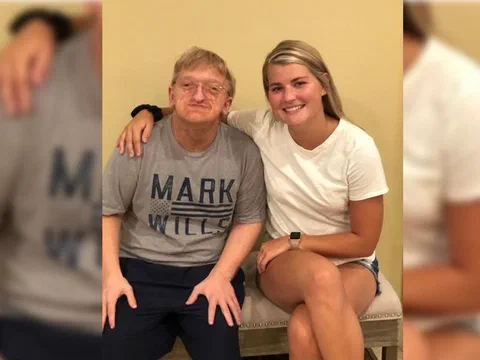
Since graduating, Alex has found his place in Lift Disability’s Elevate program, a pilot for adults with special needs. He goes to social events, local field trips and volunteer days, and has made a circle of friends in Orlando.
His family is now doing the planning every parent of a child with complex needs eventually faces: what happens when they can no longer care for him. It is emotional work, and it is the reason the foundation is writing a Guide to Securing the Future . Alex has no surgeries planned. Everyone would like to keep it that way.
How the foundation started
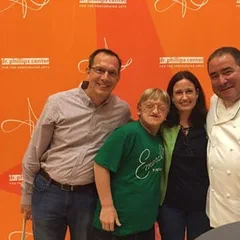
When Alex was born there was almost nowhere his family could go for information or help with Cloverleaf Syndrome. In 2003 his aunt and uncle, Dave and Colleen Schon, started The Alexander Foundation so that families of children with Cloverleaf Syndrome and other craniofacial conditions would have a place to turn. Meet the people who run it.
Growing up with Alex